
.jpg)
Careers in Focus
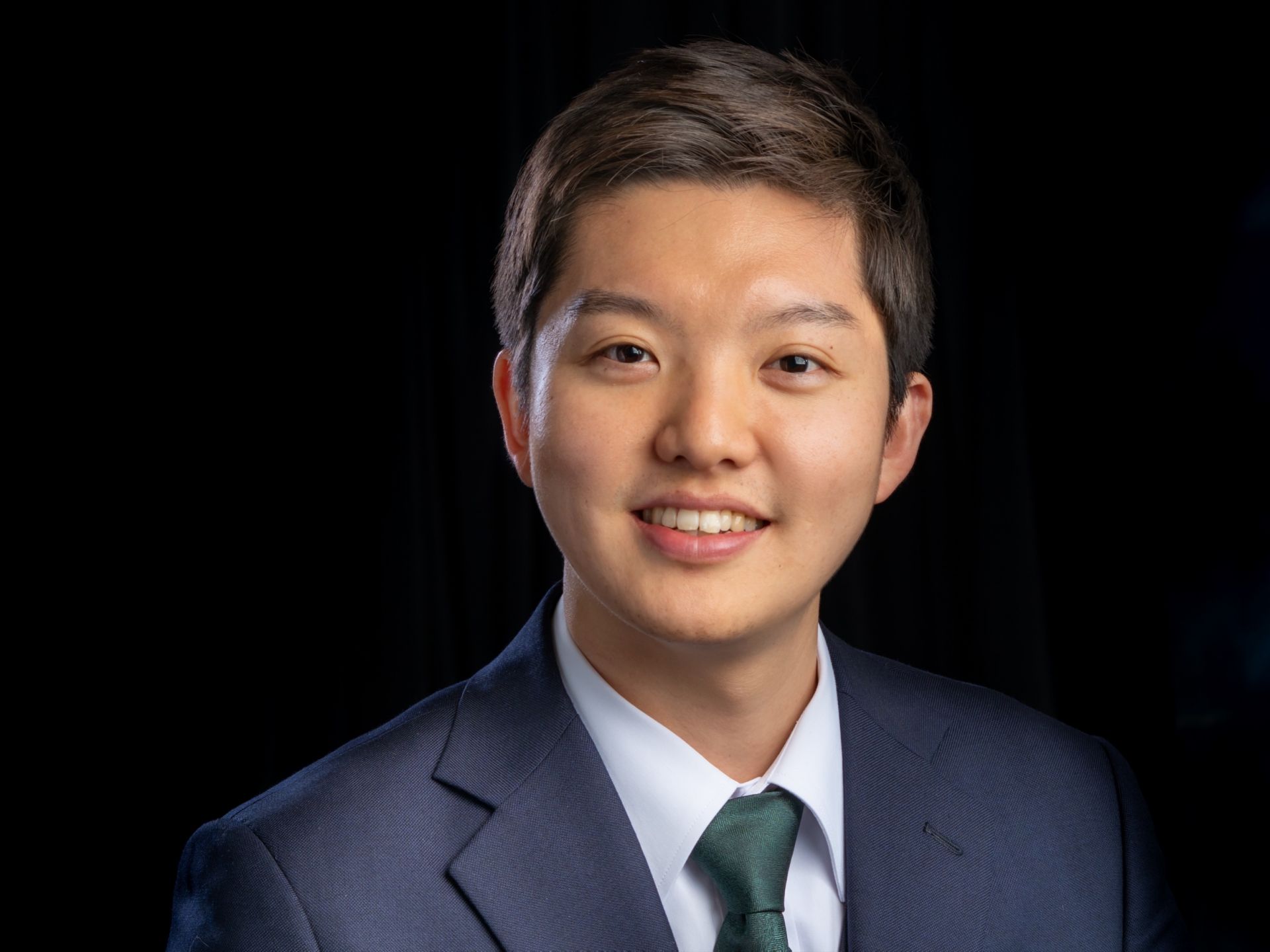
JungHyun Bae, PhD.
Biography
Dr. JungHyun Bae is an Assistant Professor in the Department of Nuclear Engineering and Engineering Physics at the University of Wisconsin Madison. Prior to joining UW Madison, he served as an Eugene P. Wigner Distinguished Staff Fellow at Oak Ridge National Laboratory (ORNL) beginning in 2022, where he conducted research at the intersection of nuclear energy, radiation detection, and national security.
Dr. Bae's research focuses on the development of advanced muon tomography systems and radiation imaging technologies for non-destructive assay and monitoring of nuclear materials. His work focuses particularly on spent nuclear fuel verification, deep geological repository monitoring, and safeguards applications for advanced reactor fuel cycles. By combining particle physics, detector development, high-fidelity Monte Carlo simulation, and advanced reconstruction algorithms, his group aims to provide next-generation tools that enhance the safety, security, and transparency of nuclear energy systems.
His research contributes to critical challenges in nuclear waste management, long-term storage integrity, and proliferation resistance. Dr. Bae has led and collaborated on projects supported by the U.S. Department of Energy and has built interdisciplinary partnerships spanning national laboratories, universities, and industry.
He was selected for the ANS "40 Under 40" recognition for his contributions to nuclear science and engineering. Through his research, teaching, and mentorship, Dr. Bae is committed to advancing innovative nuclear technologies while training the next generation of engineers and scientists to address global energy and security challenges.
Career Origins
- What was the specific moment or discovery that drew you to nuclear engineering over other disciplines?
When I was young, I wondered how the world works at a fundamental level. Physics fascinated me, especially the idea that invisible particles and forces govern everything around us. At the same time, I wanted to work in a field that had real, tangible impact on society. Nuclear engineering stood out because it sits at the intersection of fundamental science and large-scale societal needs -- energy security, medical applications, national security, and long-term environmental responsibility.
Technical Insights
- In your opinion, which emerging nuclear technology (e.g., SMRs, DT fusion, etc.) holds the most potential to change the world in the next decade?
I believe all emerging nuclear technologies offer unique strengths, but each also comes with important limitations. Small Modular Reactors (SMRs) provide clear advantages in terms of near-term deployability, enhanced passive safety features, and greater grid flexibility. However, their economic competitiveness remains uncertain until factory-based mass production is realized. In addition, as deployment scales up, safeguards and non-proliferation considerations must be carefully managed.
D-T fusion represents a compelling long-term energy goal. Yet significant technical challenges remain, including establishing a reliable tritium supply and breeding cycle, as well as mitigating the severe materials damage caused by 14.1 MeV neutrons.
Personally, I see molten salt reactors (MSRs) as a potential bridge between conventional light water reactors and future fusion systems. MSRs offer attractive advantages such as enhanced passive safety, higher thermal efficiency, and flexible fuel cycle options. Recent advancements through demonstration projects -- including Kairos Power's Hermes reactor and Natura Resources' MSR-1 -- suggest meaningful technical progress toward practical deployment.
- What is a specific technical tool or software that you consider indispensable to your work, and why?
For my research, one indispensable technical tool is GEANT4, a Monte Carlo particle transport simulation framework developed by CERN. GEANT4 allows us to model how radiation interacts with complex materials and detector systems at a very detailed physical level. Because my work involves developing new imaging systems for monitoring nuclear materials, we need to accurately simulate particle interactions, detector responses, shielding effects, and realistic geometries before building experiments.
Industry & Public Perception
- What is the one misconception about nuclear energy that you find yourself correcting most often?
I think one of the most persistent but interesting public misconceptions is the difference between a nuclear bomb and a nuclear power plant. When people hear the word "nuclear," many immediately picture the mushroom cloud from weapons testing because that image is so powerful and unforgettable. It's natural for people to wonder, "What if a nuclear reactor explodes like a nuclear bomb?"
Technically, that is impossible. Commercial nuclear reactors are fundamentally different from nuclear weapons in fuel composition, design, and operating principles. However, the hydrogen explosions (not nuclear explosions!) that occurred during the Fukushima accident in 2011 reinforced this misunderstanding. Even though those were chemical explosions caused by hydrogen buildup, the visuals were dramatic enough to blur the distinction in the public mind.
Correcting this misconception is part of our responsibility as nuclear engineers and scientists. Through clearer communication, outreach, and continued improvements in reactor safety, we can help the public better understand both the risks and the realities of nuclear energy.
- If a student is considering a career in nuclear today, what is the one skill they should focus on developing most?
It really depends on the student's academic level.
For high school students interested in nuclear engineering, I strongly recommend building a solid foundation in mathematics and physics. Advanced coursework in calculus, algebra, and physics will make the transition into college-level engineering much smoother and better prepare them for the analytical rigor of the field.
For college students, I encourage getting involved in research early. Joining a research group as an undergraduate researcher provides invaluable exposure to real-world projects. Often, students discover that research is quite different from what they initially imagined, and that experience helps clarify their interests and career direction.
For those considering graduate school in nuclear engineering, it is important to find the right research group where your background and skills can make a meaningful contribution. Nuclear engineering is highly multidisciplinary, spanning physics, materials science, mechanical engineering, computer science, and more, so students from many majors can find research areas where they play a critical role.
Reflections & The Future
- What is the project or achievement you are most proud of so far in your career?
As an early-career professional, I am most proud of serving as a faculty member in the Department of Nuclear Engineering and Engineering Physics (NEEP) at the University of Wisconsin Madison. The nuclear engineering program at UW Madison is among the top programs in the world, and it is both an honor and a privilege to work alongside world-leading faculty and exceptionally talented students. This opportunity would not have been possible without the foundation I built as an Eugene P. Wigner Distinguished Staff Fellow at Oak Ridge National Laboratory, as well as the recognition of being selected for the ANS 40 Under 40 list. Those experiences shaped my research direction, strengthened my professional network, and prepared me for the responsibilities of academic leadership.
- If we were to check back in 25 years, what do you hope the global nuclear landscape looks like?
I hope the global nuclear landscape is defined by three things: trust, innovation, and responsibility.
First, I hope nuclear energy plays a major role in achieving grid stabilization and decarbonization. That would mean a diverse fleet of advanced reactors, including SMRs and MSRs, operating safely and economically.
Second, I hope we see major progress in spent fuel management and geological disposal. In 25 years, we should no longer be debating whether nuclear waste can be stored safely. Instead, we should have at least one operational deep geological repository by advanced monitoring technologies that provide the public confidence in long-term safety.
Third, I hope safeguards and verification technologies have advanced significantly. With improved imaging systems, autonomous monitoring, and AI-assisted analysis, nuclear materials around the world should be tracked transparently and securely, reducing proliferation risks while supporting peaceful nuclear expansion.
Ultimately, I hope nuclear energy is no longer viewed as controversial, but as a mature and responsibly managed technology that contributes meaningfully to grid stability, medical innovation, and global security.
Biography
Dr. JungHyun Bae is an Assistant Professor in the Department of Nuclear Engineering and Engineering Physics at the University of Wisconsin Madison. Prior to joining UW Madison, he served as an Eugene P. Wigner Distinguished Staff Fellow at Oak Ridge National Laboratory (ORNL) beginning in 2022, where he conducted research at the intersection of nuclear energy, radiation detection, and national security.
Dr. Bae's research focuses on the development of advanced muon tomography systems and radiation imaging technologies for non-destructive assay and monitoring of nuclear materials. His work focuses particularly on spent nuclear fuel verification, deep geological repository monitoring, and safeguards applications for advanced reactor fuel cycles. By combining particle physics, detector development, high-fidelity Monte Carlo simulation, and advanced reconstruction algorithms, his group aims to provide next-generation tools that enhance the safety, security, and transparency of nuclear energy systems.
His research contributes to critical challenges in nuclear waste management, long-term storage integrity, and proliferation resistance. Dr. Bae has led and collaborated on projects supported by the U.S. Department of Energy and has built interdisciplinary partnerships spanning national laboratories, universities, and industry.
He was selected for the ANS "40 Under 40" recognition for his contributions to nuclear science and engineering. Through his research, teaching, and mentorship, Dr. Bae is committed to advancing innovative nuclear technologies while training the next generation of engineers and scientists to address global energy and security challenges.
Career Origins
- What was the specific moment or discovery that drew you to nuclear engineering over other disciplines?
When I was young, I wondered how the world works at a fundamental level. Physics fascinated me, especially the idea that invisible particles and forces govern everything around us. At the same time, I wanted to work in a field that had real, tangible impact on society. Nuclear engineering stood out because it sits at the intersection of fundamental science and large-scale societal needs -- energy security, medical applications, national security, and long-term environmental responsibility.
Technical Insights
- In your opinion, which emerging nuclear technology (e.g., SMRs, DT fusion, etc.) holds the most potential to change the world in the next decade?
I believe all emerging nuclear technologies offer unique strengths, but each also comes with important limitations. Small Modular Reactors (SMRs) provide clear advantages in terms of near-term deployability, enhanced passive safety features, and greater grid flexibility. However, their economic competitiveness remains uncertain until factory-based mass production is realized. In addition, as deployment scales up, safeguards and non-proliferation considerations must be carefully managed.
D-T fusion represents a compelling long-term energy goal. Yet significant technical challenges remain, including establishing a reliable tritium supply and breeding cycle, as well as mitigating the severe materials damage caused by 14.1 MeV neutrons.
Personally, I see molten salt reactors (MSRs) as a potential bridge between conventional light water reactors and future fusion systems. MSRs offer attractive advantages such as enhanced passive safety, higher thermal efficiency, and flexible fuel cycle options. Recent advancements through demonstration projects -- including Kairos Power's Hermes reactor and Natura Resources' MSR-1 -- suggest meaningful technical progress toward practical deployment.
- What is a specific technical tool or software that you consider indispensable to your work, and why?
For my research, one indispensable technical tool is GEANT4, a Monte Carlo particle transport simulation framework developed by CERN. GEANT4 allows us to model how radiation interacts with complex materials and detector systems at a very detailed physical level. Because my work involves developing new imaging systems for monitoring nuclear materials, we need to accurately simulate particle interactions, detector responses, shielding effects, and realistic geometries before building experiments.
Industry & Public Perception
- What is the one misconception about nuclear energy that you find yourself correcting most often?
I think one of the most persistent but interesting public misconceptions is the difference between a nuclear bomb and a nuclear power plant. When people hear the word "nuclear," many immediately picture the mushroom cloud from weapons testing because that image is so powerful and unforgettable. It's natural for people to wonder, "What if a nuclear reactor explodes like a nuclear bomb?"
Technically, that is impossible. Commercial nuclear reactors are fundamentally different from nuclear weapons in fuel composition, design, and operating principles. However, the hydrogen explosions (not nuclear explosions!) that occurred during the Fukushima accident in 2011 reinforced this misunderstanding. Even though those were chemical explosions caused by hydrogen buildup, the visuals were dramatic enough to blur the distinction in the public mind.
Correcting this misconception is part of our responsibility as nuclear engineers and scientists. Through clearer communication, outreach, and continued improvements in reactor safety, we can help the public better understand both the risks and the realities of nuclear energy.
- If a student is considering a career in nuclear today, what is the one skill they should focus on developing most?
It really depends on the student's academic level.
For high school students interested in nuclear engineering, I strongly recommend building a solid foundation in mathematics and physics. Advanced coursework in calculus, algebra, and physics will make the transition into college-level engineering much smoother and better prepare them for the analytical rigor of the field.
For college students, I encourage getting involved in research early. Joining a research group as an undergraduate researcher provides invaluable exposure to real-world projects. Often, students discover that research is quite different from what they initially imagined, and that experience helps clarify their interests and career direction.
For those considering graduate school in nuclear engineering, it is important to find the right research group where your background and skills can make a meaningful contribution. Nuclear engineering is highly multidisciplinary, spanning physics, materials science, mechanical engineering, computer science, and more, so students from many majors can find research areas where they play a critical role.
Reflections & The Future
- What is the project or achievement you are most proud of so far in your career?
As an early-career professional, I am most proud of serving as a faculty member in the Department of Nuclear Engineering and Engineering Physics (NEEP) at the University of Wisconsin Madison. The nuclear engineering program at UW Madison is among the top programs in the world, and it is both an honor and a privilege to work alongside world-leading faculty and exceptionally talented students. This opportunity would not have been possible without the foundation I built as an Eugene P. Wigner Distinguished Staff Fellow at Oak Ridge National Laboratory, as well as the recognition of being selected for the ANS 40 Under 40 list. Those experiences shaped my research direction, strengthened my professional network, and prepared me for the responsibilities of academic leadership.
- If we were to check back in 25 years, what do you hope the global nuclear landscape looks like?
I hope the global nuclear landscape is defined by three things: trust, innovation, and responsibility.
First, I hope nuclear energy plays a major role in achieving grid stabilization and decarbonization. That would mean a diverse fleet of advanced reactors, including SMRs and MSRs, operating safely and economically.
Second, I hope we see major progress in spent fuel management and geological disposal. In 25 years, we should no longer be debating whether nuclear waste can be stored safely. Instead, we should have at least one operational deep geological repository by advanced monitoring technologies that provide the public confidence in long-term safety.
Third, I hope safeguards and verification technologies have advanced significantly. With improved imaging systems, autonomous monitoring, and AI-assisted analysis, nuclear materials around the world should be tracked transparently and securely, reducing proliferation risks while supporting peaceful nuclear expansion.
Ultimately, I hope nuclear energy is no longer viewed as controversial, but as a mature and responsibly managed technology that contributes meaningfully to grid stability, medical innovation, and global security.
Last modified February 26, 2026, 10:57am CST